Author: admin

  • Energy 101

    Energy 101

    If time and motivation permit, I plan to write a series of posts sharing tips and best practices for implementing an Energy Monitoring System (EMS) in an industrial plant. My primary reason for doing so is that I’ve found very little truly useful information out there that isn’t just a sales pitch. I want to provide the foundational knowledge I wish I had access to when I first started.

    What is an Energy Monitoring System?

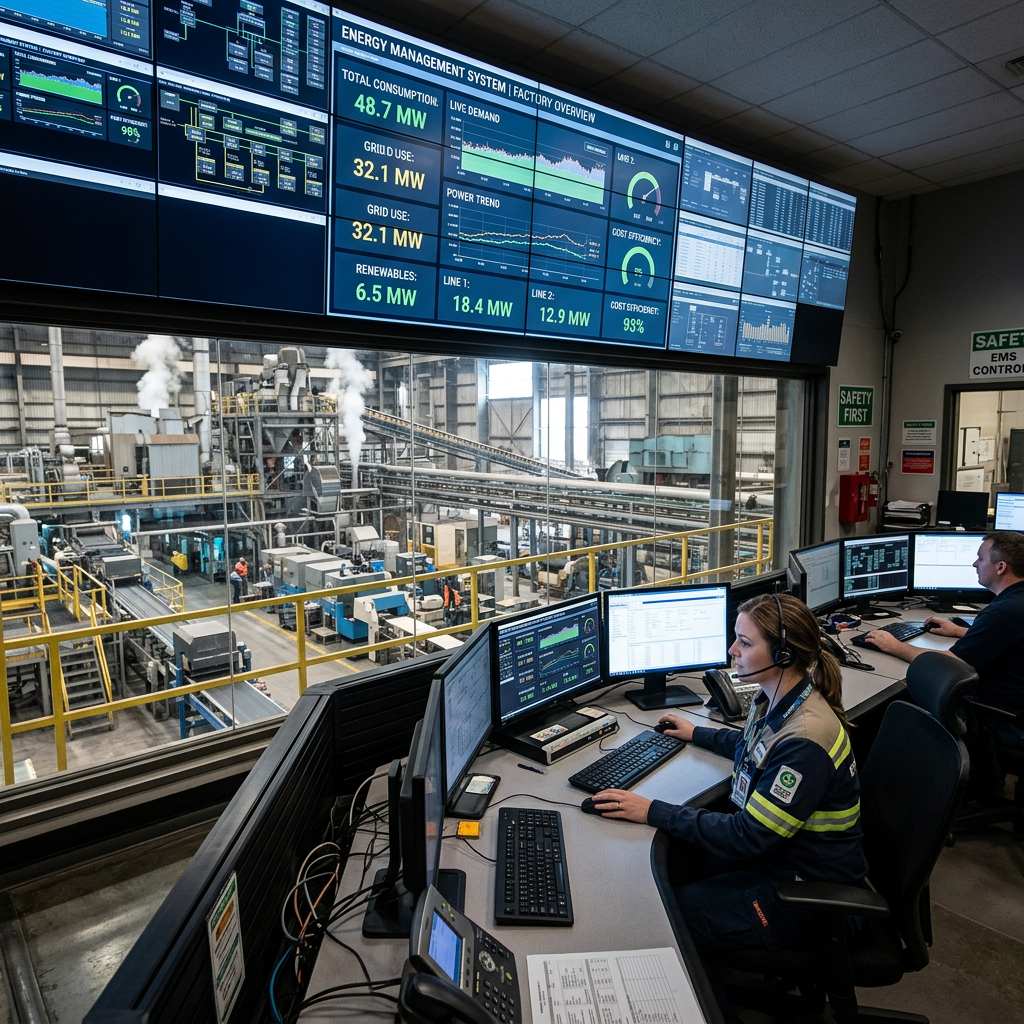
    Broadly speaking, an EMS is an integrated system consisting of hardware (various types of sensors) and software (an application where data is stored and visually presented). Additionally, these systems typically include reporting features and automated alerts.

    What is its purpose?

    Essentially, it allows you to understand exactly where a factory’s energy is being consumed. However, it is important to note: an EMS does not save a single penny on its own. In fact, if the data isn’t used to establish and follow an action plan, it is a useless expense.

    Think of it like someone who wants to lose weight and buys a high-tech scale. It weighs them every morning, measures their body fat percentage, tracks calories burned, and creates beautiful progress charts. If that person doesn’t change their diet or exercise habits, they won’t lose a single gram—no matter how precise the scale is.

    So, is an EMS actually necessary?

    If operators are disciplined, if managers organize resources effectively, and if everyone is fully committed to reducing wasted energy, an EMS might only be useful for complex analyses (like detailed equipment comparisons) which rarely justify the initial investment.

    But the reality is that most companies operate with a culture focused solely on maximizing production, often overlooking energy efficiency. This is where an EMS can deliver significant results. An analysis of real-world cases in energy-intensive industrial sectors showed that the median savings under ISO 50001 was 5%, with a standard deviation of 2.3%.

    First, you need to define your goals: Are you looking for energy savings, shift and workload optimization, or ISO 50001 compliance?

    Depending on your goals, budget, and time constraints, you will want to prioritize certain measures over others. Don’t worry; an EMS must be scalable. Future needs will inevitably require modifications or additions.

    Once you have set your goals, you should perform an initial audit to understand your plant’s characteristics in detail. A good starting point includes analyzing energy (electricity, gas, fuel, etc.) and water bills, reviewing the plant’s single-line diagrams, and listing all appliances and machinery along with their rated power.

    I recommend a walkthrough, inspecting machine by machine. Start sketching the connection structure and the physical location of future measuring points. The closer they are, the cheaper and easier the installation will be.

    With a rough idea of your needs, you should determine your Key Performance Indicators (KPIs). Do you need to monitor temperatures or water consumption? Do you need machine-level energy meters, or should you focus on your main energy consumers?

    At this point, you can contact suppliers or perhaps try to build your own solution. In my experience, a supplier’s goal isn’t necessarily to save you energy, but to sell their products. We will circle back to this topic later.

    Installing an EMS is not only ethically sound, but also an exciting and rewarding experience. Welcome to the world of (pure) energy.


  • The Tenth Man’s rule

    The Tenth Man’s rule

    Recently, I’ve stumbled down a bit of a rabbit hole that led me to an interesting text. I watched World War Z a few years ago (in my opinion, the book is far more engaging than the film, and with fewer gory scenes), and I still remember the allusion to the ‘Tenth Man Rule.’ Supposedly, this is a rule used by Israeli Intelligence where, if nine advisors agree on a conclusion, the tenth is required to disagree and adopt a contrarian viewpoint. This helps avoid groupthink and complacency, while preparing for low-probability ‘black swan’ threats.

    That led me to do some research looking for a non-fiction source, and Reddit pointed me to a paper titled Lessons from Israel’s Intelligence Reforms by J. Kuperwasser. The reading is surprisingly easy (I wonder what kind of documents I’m used to reading if an academic military paper feels easy to me…).

    In the document, Mr. Kuperwasser doesn’t mention the ‘Tenth Man Rule’ using those exact words. Instead, he uses a more classic and well-known figure: ‘The Devil’s Advocate.’ In the words of the author:”

    The devil’s advocate office ensures that AMAN’s intelligence assessments are creative and do not fall prey to group think. The office regularly criticizes products coming from the analysis and production divisions, and writes opinion papers that counter these departments’ assessments. The staff in the devil’s advocate office is made up of extremely experienced and talented officers who are known to have a creative, “outside the box” way of thinking. Perhaps as important, they are highly regarded by the analysts. (page 4).

    But the question is: Is your organization resilient enough to cope with internal criticism? Are you sure that you or your colleagues promote this kind of behavior? I often see how people, perhaps unconsciously, disapprove of criticism regarding their way of thinking about a subject. AMAN also provides an institution-level measure:

    While the devil’s advocate office is an institutional-
    level safeguard against group think, there is also an
    individual-level safeguard. The analysts themselves
    are given venues for expressing alternate opinions.
    Any analyst can author a “different opinion” memo in
    which he or she can critique the conclusions of his or
    her department. Senior officers do not criticize ana-
    lysts who choose to write such memos.

    (the following paragraph is part of the DETECTA manual).

    Groupthink: The Enigma of Radio Waves and Pulsars (1967) Occurs when the desire for harmony or conformity in a team results in irrational decision-making.

    In 1967, astrophysicist Jocelyn Bell detected a strange radio signal that blinked with perfect mathematical precision from deep space. Nothing like it had ever been seen before. When she presented the finding to her team of supervisors at Cambridge, a fascinating phenomenon of groupthink emerged: because the signal was so regular, the entire group decided it had to be human interference. For weeks, the team convinced themselves it wasn’t worth looking for a new natural explanation because “everyone knew” stars didn’t blink like that. Group pressure caused scientific data suggesting a new class of star to be ignored. Only when Bell detected a second signal in a totally different part of the sky did the groupthink bubble burst, allowing the discovery of pulsars.

    I always like to add a song that is somehow related to the post. Unfortunately, my knowledge of Israeli music is very limited.

    However, there is a song I love; an amazing theme from the Yemenite Jewish tradition. Ofra Haza’s cover is my favorite, but in this case, I think this more delicate version is more fitting.

  • Elementary, my dear Claude

    Elementary, my dear Claude

    Everyone boasts about reading Vargas Llosa or Conrad, but on the vast majority of bedside tables, you’ll find bestsellers and mass-market paperbacks. In my case, the influence of my father—who was enamored with detective fiction—led me to my favourite reading: Sherlock Holmes.

    In one of his stories, The Adventure of the Copper Beeches, Conan Doyle puts the following words into Holmes’ mouth:

    “Data! Data! Data! I can’t make bricks without clay.”

    The fact is, when I use AI for research and analysis, the problem doesn’t really lie in the system’s capabilities, nor in the connectivity between databases, nor even in the budget. The key is data quality. Given the enormous variety of possible breakdowns in a machine, you ultimately have to trust that the classification of the failure, the description of the symptom, and the corrective actions are accurate and sufficiently informative. This is a task that only humans can perform—at least for now—and therein lies the obstacle.

    We invest millions of euros in data acquisition and processing technology, yet we leave everything in the hands of the goodwill, aptitude, and attitude of an operator who often doesn’t even realize the importance of what is being asked of them. Consequently, we analysts get frustrated and blame the “human factor,” which drives us to spend even more money and resources on further sensing.

    This is all well and good in critical environments or those with abundant resources, but in the real world, time and money usually restrict our capacity to automate, and that leads me to the following reflection.

    This race to add sensors to replace senses reminds me of arms manufacturers in their eternal battle between creating better swords and better shields. Perhaps I am biased by my Psychology degree, or maybe I’ve been indoctrinated by the Japanese concept of individual responsibility that has permeated my thinking through TPM training, but I wonder: Why do we invest so much in the quality of sensors and so little in the quality of people? A company that rests solely in the hands of responsible, committed people—who perceive workplace problems as their own and feel certain that the company reciprocates by caring for their physical, economic, and even psychological well-being, while refusing to tolerate toxic or uncommitted individuals—does not need as many sensors or as much automation. They already possess the best data acquisition network: people.

    But we must work with what is, not what should be, so here are a few tips to try and improve data quality:

    • Analyze the nature of your breakdowns: If you have the resources, analyze past data to extract the major categories and subcategories of reported problems. Don’t get stuck in the classic hierarchy (electrical-hydraulic-pneumatic), because the person writing the report often cannot distinguish the technical cause. Imagine you are a doctor talking to patients: they don’t need to know the source of their pain; they only need to report the symptoms with honesty and clarity.
    • Close Work Orders (WO) with mandatory confirmation of real vs. estimated downtime: Often, the actual intervention time is inflated by organizational issues (lack of a technician to restart the equipment, warm-up times, delays in responding to the call…). These causes are legitimately part of a breakdown at a production level, but for Maintenance—as faithful subjects of the god Pareto—they can distort the analysis, giving importance to secondary problems and sidelining more serious ones.
    • Automate data capture: Try to have the system automatically populate as much data as possible: date, shift, time, equipment, tool, material, technician… If you could even include operating parameters in the data capture of your CMMS (Computerized Maintenance Management System), you would obtain valuable information while saving the operator time. For data that must be entered manually, set up mandatory fields and offer hierarchical lists based on your previous analysis.

    Last but not least, working on motivation is essential. When someone is vague in a description, it is generally because:

    1 They don’t see the utility: No one has shown them that the data is actually used for anything.

    3 They don’t know how to describe it: They lack a standard technical vocabulary.

    3They are in a hurry: The system penalizes them for time, but not for quality.

    4 There are no incentives: Filling it out poorly or filling it out well yields the same result for them.

    Here some ideas to improve the motivation:

    • Data that goes in must come out visible to the person who generated it. Try to provide simple visual feedback to the operator and technician. Explain the “why” and the real-world utility of their report.
    • Daily analysis. The supervisor’s review should be a key milestone, not a routine. The supervisor doesn’t validate the WO just to “approve” it, but to gather information, reflect on it, and think of actions to prevent or mitigate recurrence.
    • Chase the data. Starting with the most significant breakdowns, try to follow up with the person in charge (in person or via email). The goal is to send a clear message to everyone: information is a priority.
    • Light gamification by team. A weekly ranking visible on the plant floor regarding reporting quality by shift or line (not by individual, to avoid friction) can help foster healthy competition.

    And at the end of the day, with work, luck, and time, perhaps you’ll make music where there was only sound before…

  • TPM killed the maintenance star

    TPM killed the maintenance star

    (If you didn’t get the reference in the title, you’re probably too young… Please enjoy the Buggles here)

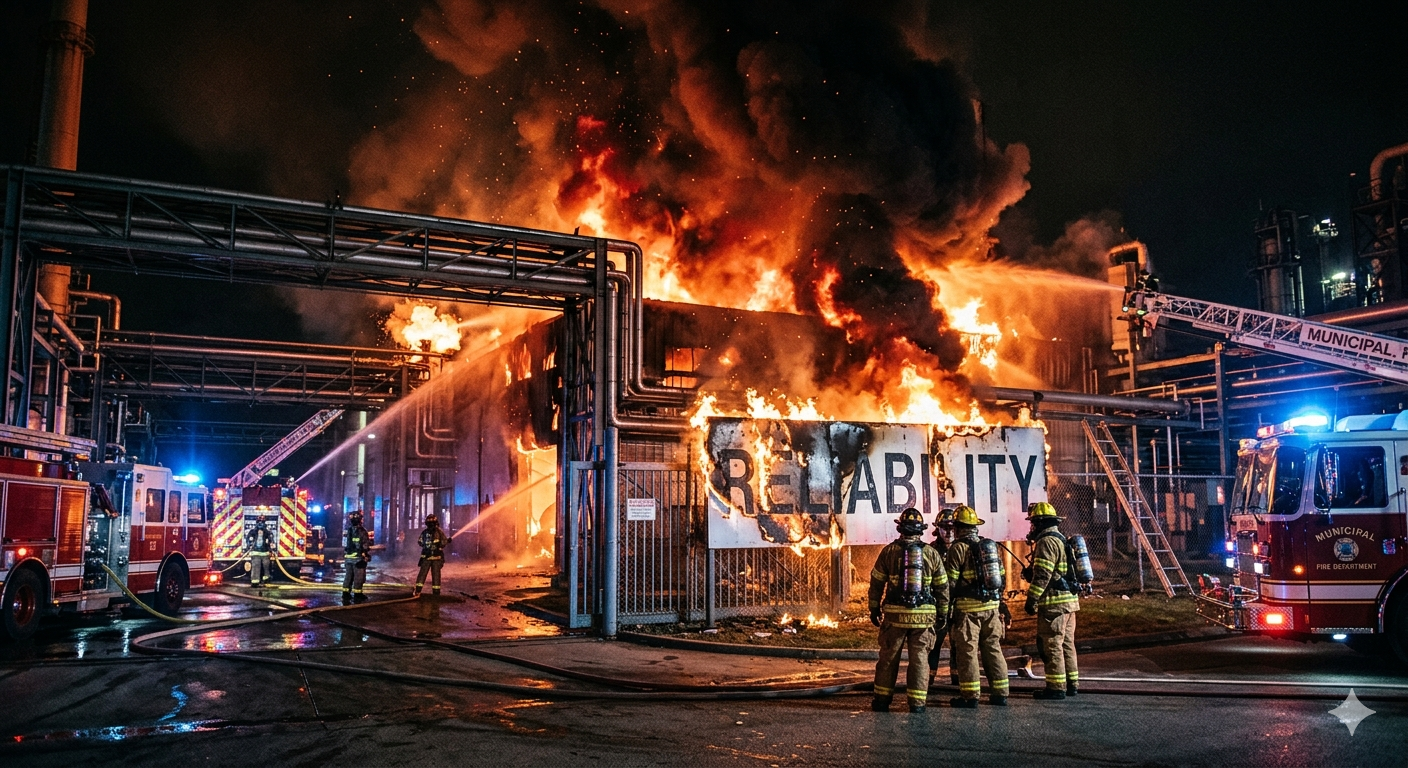
    Many factories organize their maintenance departments as if they were fire stations: they only think of them when there is an emergency. This mindset shifts the focus toward maintaining a skeleton crew whose only goal is to react quickly to crises.

    We have grown accustomed to the Maintenance Manager as a “Rock Star”—someone who swoops in when everything collapses, offering a quick, creative, and often incredibly expensive fix. But more often than not, this brilliance is just a mask for a lack of strategy and misaligned resources.

    Since the 1970s, when Japanese industry began treating equipment care as a collective responsibility through Total Productive Maintenance (TPM), the blueprint for success has changed. Modern maintenance departments need fewer egos and more teamwork. Individual talent must be balanced with a shared vision and a commitment to reliability over “heroic” repairs.

    What can we do?

    First of all, you should congratulate the team for their quick response and commitment. However, once the storm passes, it is time to reflect on why we reached this point of catastrophe. The Kaizen philosophy has a specific word for this.

    (the following paragraph is part of the DETECTA manual).

    Hansei: Reflect. What did we do wrong? What can we change? What should we avoid? Hansei does not look for culprits; it looks for the truth. Limit yourself to what you can control and be honest with yourself. If you deepen your knowledge of equipment and processes, even if circumstances do not allow for improvement, at least you will be able to increase your control and detect problems before they worsen.