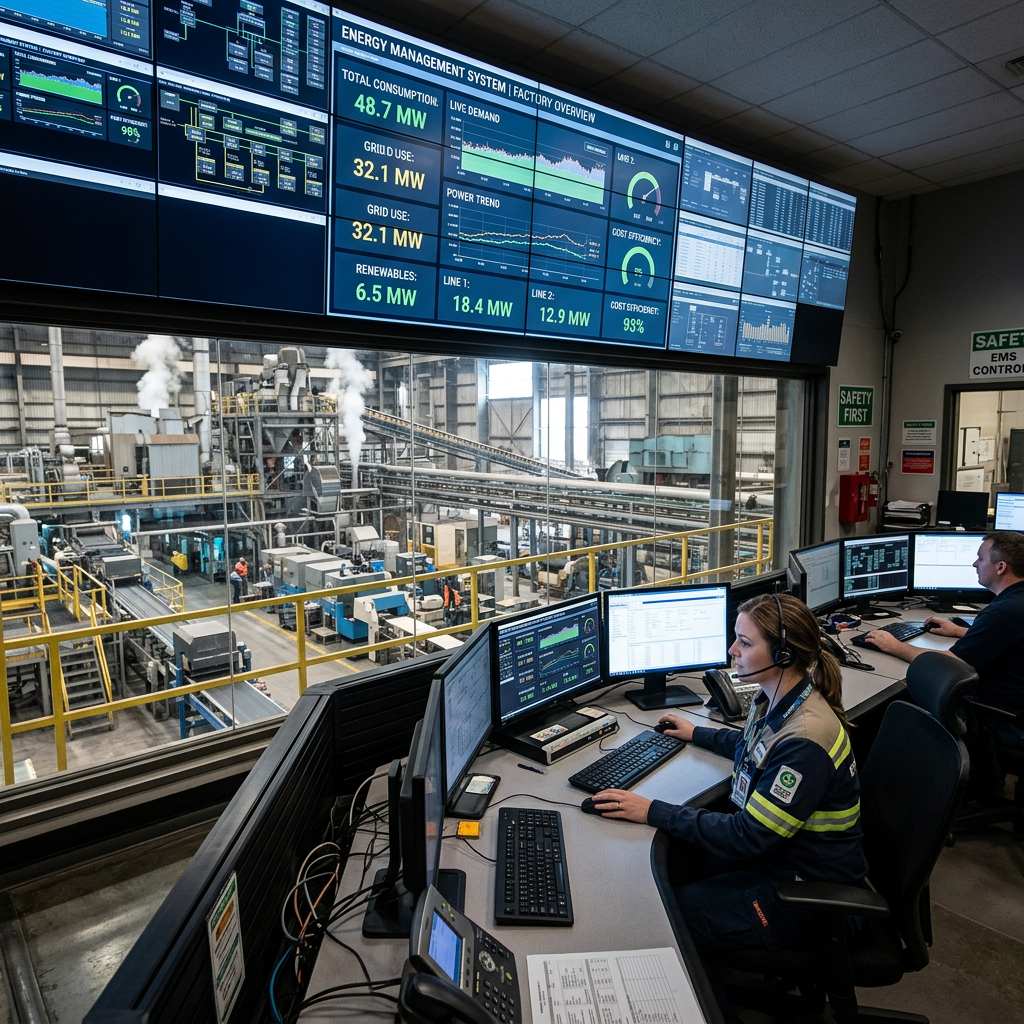
If time and motivation permit, I plan to write a series of posts sharing tips and best practices for implementing an Energy Monitoring System (EMS) in an industrial plant. My primary reason for doing so is that I’ve found very little truly useful information out there that isn’t just a sales pitch. I want to provide the foundational knowledge I wish I had access to when I first started.
What is an Energy Monitoring System?
Broadly speaking, an EMS is an integrated system consisting of hardware (various types of sensors) and software (an application where data is stored and visually presented). Additionally, these systems typically include reporting features and automated alerts.
What is its purpose?
Essentially, it allows you to understand exactly where a factory’s energy is being consumed. However, it is important to note: an EMS does not save a single penny on its own. In fact, if the data isn’t used to establish and follow an action plan, it is a useless expense.
Think of it like someone who wants to lose weight and buys a high-tech scale. It weighs them every morning, measures their body fat percentage, tracks calories burned, and creates beautiful progress charts. If that person doesn’t change their diet or exercise habits, they won’t lose a single gram—no matter how precise the scale is.
So, is an EMS actually necessary?
If operators are disciplined, if managers organize resources effectively, and if everyone is fully committed to reducing wasted energy, an EMS might only be useful for complex analyses (like detailed equipment comparisons) which rarely justify the initial investment.
But the reality is that most companies operate with a culture focused solely on maximizing production, often overlooking energy efficiency. This is where an EMS can deliver significant results. An analysis of real-world cases in energy-intensive industrial sectors showed that the median savings under ISO 50001 was 5%, with a standard deviation of 2.3%.
First, you need to define your goals: Are you looking for energy savings, shift and workload optimization, or ISO 50001 compliance?
Depending on your goals, budget, and time constraints, you will want to prioritize certain measures over others. Don’t worry; an EMS must be scalable. Future needs will inevitably require modifications or additions.
Once you have set your goals, you should perform an initial audit to understand your plant’s characteristics in detail. A good starting point includes analyzing energy (electricity, gas, fuel, etc.) and water bills, reviewing the plant’s single-line diagrams, and listing all appliances and machinery along with their rated power.
I recommend a walkthrough, inspecting machine by machine. Start sketching the connection structure and the physical location of future measuring points. The closer they are, the cheaper and easier the installation will be.
With a rough idea of your needs, you should determine your Key Performance Indicators (KPIs). Do you need to monitor temperatures or water consumption? Do you need machine-level energy meters, or should you focus on your main energy consumers?
At this point, you can contact suppliers or perhaps try to build your own solution. In my experience, a supplier’s goal isn’t necessarily to save you energy, but to sell their products. We will circle back to this topic later.
Installing an EMS is not only ethically sound, but also an exciting and rewarding experience. Welcome to the world of (pure) energy.